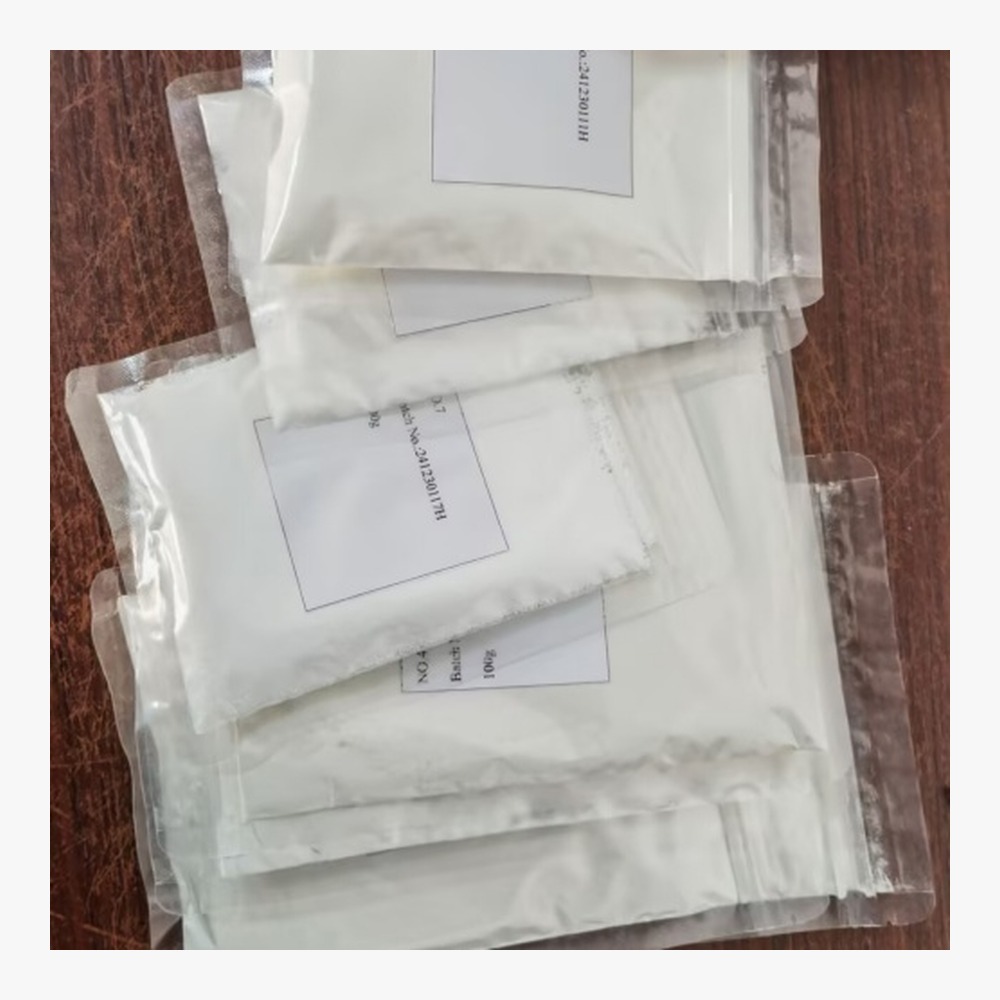
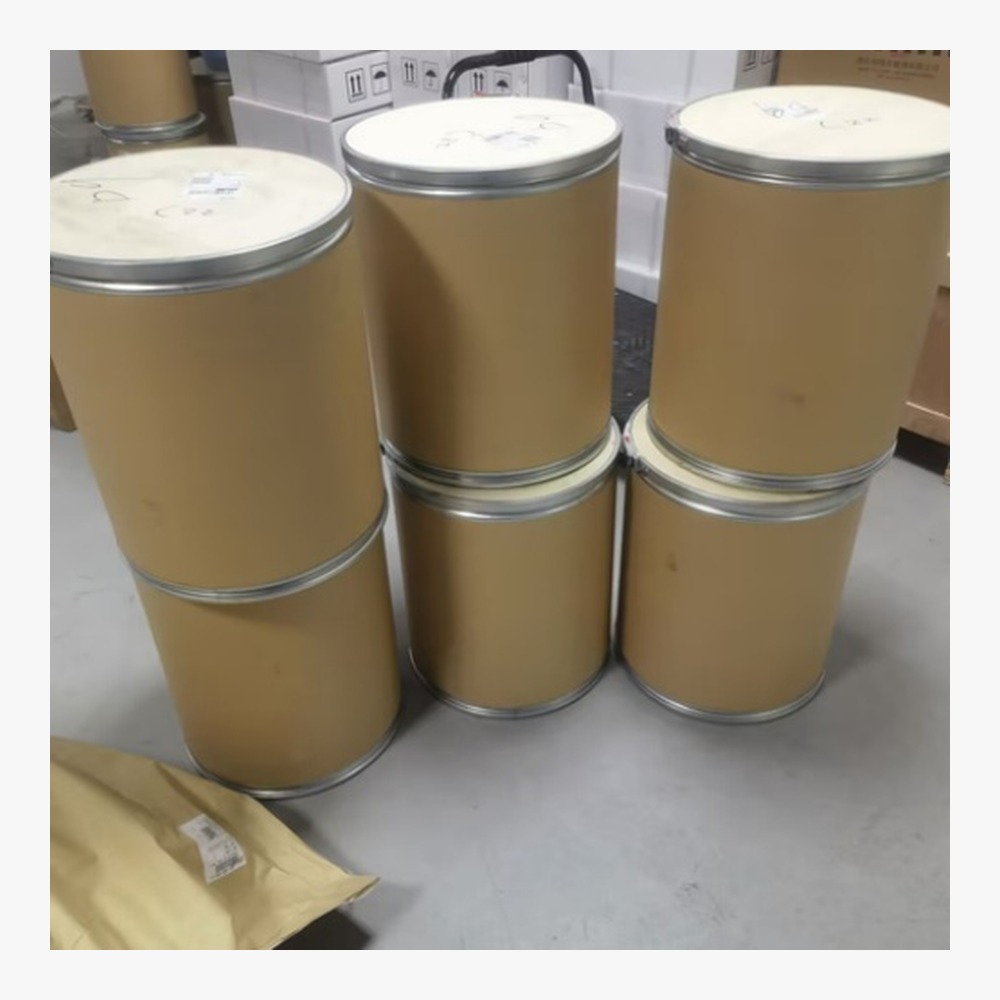
Product Name: Tri(o-tolyl)phosphine
CAS No.: 6163-58-2
Molecular Formula: C21H21P
Molecular Weight: 304.37
Appearance: white powder
Assay: 99%
Packaging: 1kg/bottle 25kg/drum

Product Name: Tri(o-tolyl)phosphine
CAS No.: 6163-58-2
Molecular Formula: C21H21P
Molecular Weight: 304.37
Appearance: white powder
Assay: 99%
Packaging: 1kg/bottle 25kg/drum
| Chemical Name | Tri(o-tolyl)phosphine |
| Other Name | Tri-o-tolylphosphine |
| CAS No. | 6163-58-2 |
| Molecular Formula | C21H21P |
| Molecular Weight | 304.37 |
| Appearance | white powder |
| Assay | 99% |
| Item | Standard |
|---|---|
| Appearance | white powder |
| Purity Wt Pct | >=99.0% |
| Melting point | 123-125 °C(lit.) |
| Boiling point | 412.4±44.0 °C(Predicted) |
| Density | 1.16 g/cm³ at 20 °C |
| Solubility | Chloroform, Ethyl Acetate |
Tri(o-tolyl)phosphine – Applications
It serves as a sterically bulky, electron-rich monodentate phosphine ligand for palladium-catalyzed Suzuki-Miyaura cross-coupling reactions. Its large cone angle accelerates the reductive-elimination step within the catalytic cycle, suppresses side-reactions, and improves catalytic turnover efficiency. It is widely used for constructing biaryl skeletons in pharmaceutical intermediates, fine chemicals and organic materials; it shows good performance for aryl bromides and partially activated aryl chloride substrates, and can realize high conversion under relatively mild reaction conditions.
It is an important supporting ligand for palladium-catalyzed Heck, Stille and Buchwald-Hartwig coupling reactions in organic synthetic workflows. Co-used with palladium salts in-situ, it stabilizes zero-valent palladium active species and adjusts catalytic activity and selectivity. This system is applied to build carbon-carbon and carbon-nitrogen bonds for the synthesis of complex aromatic molecules, drug intermediates and functional organic molecules in lab-scale and pilot-scale fine chemical production.
It acts as a key ligand in ruthenium-catalyzed direct amination of alcohols and rhodium-catalyzed homogeneous hydrogenation reactions. When coordinated with ruthenium metal centers, it promotes the catalytic conversion of alcohols into corresponding amines without pre-activation of hydroxyl groups. In rhodium-catalyzed hydrogenation systems, it modulates metal-center electron density to improve hydrogenation reactivity and substrate compatibility, suitable for selective reduction of olefins and other unsaturated groups in organic intermediates.
It is applied in coordination chemistry research and the preparation of specialized organophosphorus metal complexes and phosphine derivatives. It can react with selenium to prepare tri-ortho-phosphine selenide for spectroscopic and structural-chemistry studies. It also forms cyclometalated metal complexes with transition-metal salts; these complexes are studied as candidate homogeneous catalysts for new organic transformation reactions, supporting methodology research in organometallic chemistry.
1kg/bottle 25kg/drum
Store in a dry place and protect from direct light.