
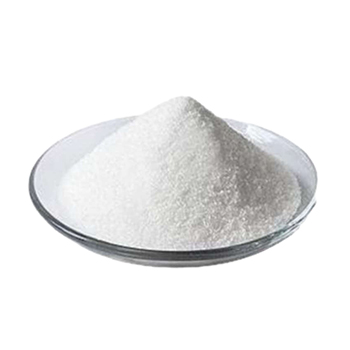
- Name: Octanohydroxamic Acid
- CAS No.: 7377-03-9
- Appearance: White crystalline
- Purity/Assay: ≥99.0%
Octanohydroxamic Acid CAS 7377-03-9
Description
Caprylhydroxamic Acid Quick Details
Chemical Name: Caprylhydroxamic Acid
Synonyms: Octanohydroxamic Acid; N-Hydroxyoctanamide; Octanoylhydroxamic Acid; HOHA; Oct-HA; CaprylhydroxaMic Acid
CAS No.: 7377-03-9
EC No.: 230-936-7
Molecular Formula: C8H17NO2
Molecular Weight: 159.23 g/mol
Appearance: White crystalline
Assay/Purity: ≥99.0%
Caprylhydroxamic Acid Specification
| Item | Specifications | Results |
| Appearance | White crystalline | White crystalline |
| Odor | Characteristic | Conforms |
| Purity(HPLC) | ≥99.0% | 99.97% |
| Melting point | 78-81℃ | 80.4℃ |
| Volatile matter | ≤0.5% | 0.06% |
| Hydroxylamine
hydrochloride |
≤10ppm | Conforms |
| Conclusion | The results conforms with Enterprise standards | |
Caprylhydroxamic Acid Applications
nCaprylhydroxamic Acid (CHA) is widely used in the personal care industry, mainly for its preservative and chelating properties.
- Broad-Spectrum Preservative Booster: Used as a non-traditional preservative, it exhibits potent antimicrobial activity against bacteria, yeast, and mold, especially in the optimal pH range of 4.0 to 7.5 for many cosmetic products.
- Chelating Agent: Functions as a chelator to complex with metal ions (such as iron), which helps inhibit microbial growth by limiting access to essential metal nutrients, and enhances the efficacy of other preservatives.
- Cosmetic Biostatic Agent: Often combined with a diol (like Propanediol or 1,2-Hexanediol) to create effective preservative systems that are free of traditional preservatives (parabens, formaldehydes, etc.).
- Skincare Formulations: Incorporated into creams, lotions, serums, and masks to ensure product stability and safety against microbial contamination.
- Alternative to Traditional Preservatives: Increasingly used in “natural” or “preservative-free” cosmetic formulations due to its mild profile and effectiveness.
- Flotation Reagent: In the mining industry, Octanohydroxamic Acid (OHA) is also used as a hydroxamate collector for the flotation separation of certain minerals, such as monazite and calcite.
Caprylhydroxamic Acid Packaging & Shipping
Standard Packaging: Typically packaged in 25 kg fiber drums or cartons with double internal polyethylene (LDPE) bags to maintain product integrity. Smaller quantities (e.g., 1 kg, 5 kg, 10 kg) may be sealed in foil bags or bottles.
Customized Packaging: Available upon request, which may include specific weights, custom-labeled bottles, or specialized inner packaging based on client needs.
Caprylhydroxamic Acid Storage
-
-
Storage Conditions: Store in a cool, dry, and well-ventilated place. Keep the container tightly closed when not in use. Protect from light and moisture.
-
Recommended Storage Temperature: Store at Room Temperature (typically $15^circ C$ to $25^circ C$) in a dark place.
-
Incompatibilities: Avoid contact with strong oxidizing agents. In cosmetic formulations, note that CHA can react with some mineral smectite clays (containing iron ions) potentially resulting in slight color changes (orange to red complexes).
-